The Black Eagles Survey (BES) has been going on between May and October since the early 1960s. It is the longest going citizen science eagle breeding survey in the world.
On the weekend of 21 – 23 July we celebrated the project’s 60th anniversary milestone. Citizen and qualified scientists from all corners of the country came together to reflect on the last 60 years and of course, bask in the glory of the spectacular Matobo. Matobo has been a haven for the eagles and the survey and it was therefore fitting that these celebrations were held here and at the peak of the breeding season. The celebration also aimed to:
- To further interests in the study and survey of the Black Eagles
- To promote the conservation of Zimbabwean raptors as an integral part of the African Heritage
- To foster an appreciation of birds and discussion of Zimbabwean birds in relation to people
- To disseminate information on eagles through appropriate presentations from researchers and experts
- To share different field experiences and data collection techniques.
Friday 21 July
Eight MYCS members traveled to Farmhouse Lodge in Matobo on a cold Friday afternoon. On arrival, they went to the campsite where they pitched their tents for the 1st time and did a splendid job with the camp setup. We took a walk to the reception and the celebrations rolled into action. We got there ready to start the afternoon with a cup of tea that warmed us straight into the business of the weekend. John and Jenny Brebner set the ball rolling with a brief history of the BES in the Matobo hills, followed by introductions by Julia Pierini BLZ CEO while Peter Makhusa directed the rest of the evening as Master of Ceremonies.
We had a jam-packed first evening as the young took over the podium. Mthabisi Khumalo presented on the “Conservation Status of Raptors in Zimbabwe”, followed by ‘skipper” Merlyn Nkomo who presented on “The influence of rainfall on the Verreaux’s Eagle and their prey” to end the day’s presentations.
Saturday 22 July
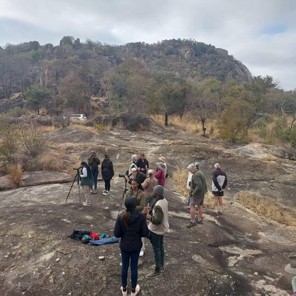
Saturday morning filled the Farmhouse car park with great enthusiasm as the young and old got into three different groups to visit the nests. One group went to the Whovi Game Park side while the other two went to the Recreation Park side. The groups were fluid and mixed all through the day. We started at the Moth’s shrine and “Stork” gave us a brief tour. We separated shortly after and the other group led by Gaynor disappeared into the hills.
A pair of Black Eagles took to the skies like two aircrafts showcasing at a field show, what a start to the day! The iconic birds took our breath away and filled us with awe as they displayed their splendour. A few hundred meters away, right on the ledge, a colourful stunning fledgling stood with an adult on the nest mesmerizing the Hararians who had driven 400+km for such a show. The youth that went with other teams, most of whom were attending their first-ever nest monitoring session, also had this to say about their experience.
“The 60th anniversary of the Black Eagle Survey in Matopos was a thrilling and unforgettable experience. In the Whovhi area, we spotted 6 eagle nests and were even able to get a glimpse of two eaglets and observe these majestic birds up close in their natural habitat using a telescope. From signs like the colour of the eaglets, we were able to deduce data like their age which made the experience thrilling. In addition to the birdwatching, we also had the chance to go hiking in the Matobo Hills, which was equally exhilarating. The rugged terrain and stunning views including the different animals we encountered made for an experience we will cherish for years to come. Overall, our trip to celebrate the 60th anniversary of the Black Eagle survey helped us connect with nature in a uniquely rewarding manner. We felt privileged to have been part of something so good and hope for the continuation of the survey in the years to come”-Rumbi
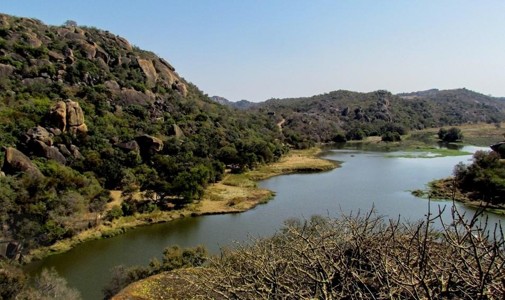
“We were very fortunate to be a part of the 60th Anniversary of the Black Eagle survey in the Matobo area. We had an amazing day, most of which was spent driving around the National Park, which allowed us to take in some of the beautiful scenery the Matobo. We travelled over some of the most difficult gravel roads in the park in search of the nests, built skilfully with twigs and small branches on the vertical faces of giant granite rocks. It’s a game of patience, telescopes set out giving us a clear zoomed-in picture of the nests, and eyes strained through our binoculars as we wait to see any sign of movement. It was such an amazing experience to see and hear the chick at the same time as well as to see an adult bird, possibly one of the parents soaring in the sky just above the nest. A brief stopover for some lunch at the Maleme Dam gave us a great opportunity to see some waterfowl and other raptors as well. We then set out to see one last nest before the day came to an end. This time we saw a much older chick with brown plumage and the parents as well perched right above the nest on a giant granite boulder. In all, it was an unforgettable experience and a great learning opportunity. Not just to see the Black Eagles and the chicks but all the other raptors we were lucky to see in the area.”-Dylan.
The day’s checklist had over 45 different species with the Martial and African Hawk Eagles being my favourites of the weekend. I’m sure everyone picked up a lifer or at least a favourite in the hills. The evening was equally exciting, BirdLife Zimbabwe council president, Neil Deacon, began the evening with a presentation followed by Paul Hubbard’s talk titled – Knowing and loving the Matobo hills: A history of the study of a magnificent landscape 3000BCto 2022. In conclusion, the BES 60th was a great experience all around. We learned a lot and look forward to growing the survey further from the interactions we had.